

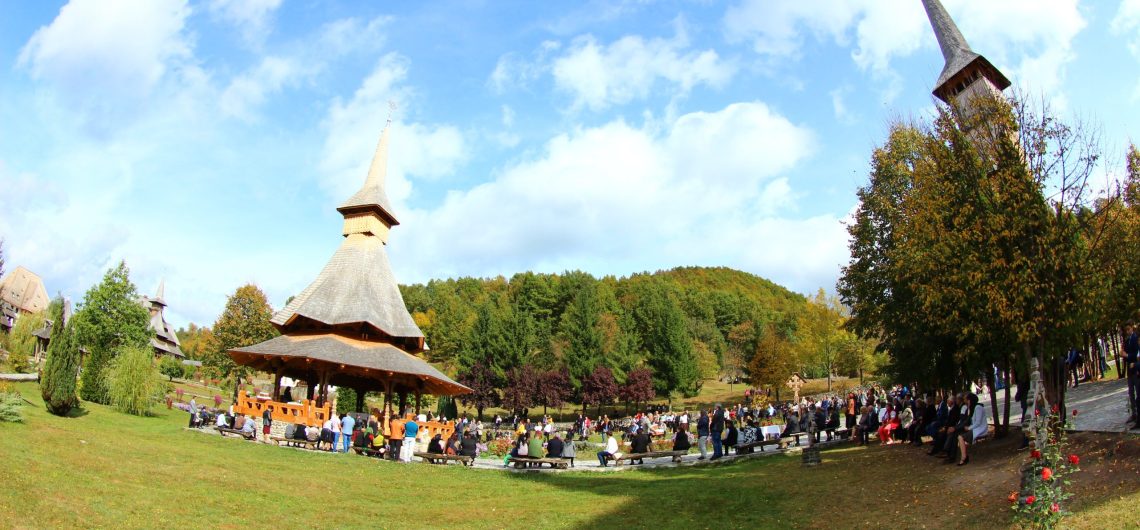
In the far reaches of northern Romania, where forested hills roll gently under heavy skies and wooden gates creak softly in the breeze, there stands a series of churches unlike any in the world. Built of timber and time, the Wooden Churches of Maramureș are not merely historical landmarks—they are expressions of faith carved in silence, devotion, and oak.
Recognized by UNESCO for their spiritual and cultural value, these hand-built sanctuaries reflect a deep-rooted Orthodox tradition shaped by village life and centuries of resilience. Their tall spires, shingled roofs, and vividly painted interiors whisper stories of a people who preserved their identity through art, prayer, and craftsmanship—long after empires tried to silence them.
This article explores the rich legacy of these churches, from their historical context and symbolic design to the most remarkable sites to visit on a private tour of Romania. Along the way, you’ll discover how Maramureș offers more than heritage—it offers living tradition, enduring hospitality, and a glimpse of a world that still moves by soul, not speed.
If you’re seeking a deeper cultural experience beyond castles and cities, this is the story Romania tells best—with wood, paint, and generations of belief.
Table of Contents
- What Are the Wooden Churches of Maramureș?
- The Most Remarkable Churches to Visit
- Faith in Timber – Spiritual Meaning and Artistic Symbolism
- More Than Churches – What Makes Maramureș Unique
- Planning Your Visit – Tips for Traveling to Maramureș
- Why a Guided Tour Is the Best Way to Experience Maramureș
- A Journey Carved in Silence, Spirit, and Wood
What Are the Wooden Churches of Maramureș?
In the heart of northern Romania, where the Carpathian hills cradle sun-dappled valleys and folklore still echoes in everyday life, stand some of Europe’s most remarkable wooden structures. The Wooden Churches of Maramureș are not grand in size, but in meaning, detail, and legacy—they are monumental.
Built between the 17th and 19th centuries using nothing but wood, nails, and tradition, these churches reflect the resilience and artistry of the Romanian people under Austro-Hungarian rule. At a time when Orthodox Romanians were prohibited from building stone churches, the locals turned to timber—their most abundant and symbolic material. What they created was a series of sacred buildings that are both humble and towering, practical and poetic.
Characterized by tall, slender bell towers, steep shingled roofs, and hand-carved ornamentation, these churches were constructed by local master carpenters using only traditional joinery techniques—no metal, no concrete, just craftsmanship passed down through generations. Inside, their walls are covered with vivid frescoes and icons painted on wood panels, telling the stories of the New Testament with simplicity and spiritual intensity.
In 1999, eight of these wooden churches were inscribed on the UNESCO World Heritage List for their outstanding universal value. They represent a unique fusion of Orthodox religious tradition and local vernacular architecture, unmatched anywhere in Europe. While there are over a hundred wooden churches scattered throughout Maramureș, these eight—found in Bârsana, Budești, Desești, Ieud, Plopiș, Poienile Izei, Rogoz, and Șurdești—are considered the most emblematic.
Each of these churches was built by villagers, not nobles. Their scale speaks of rural life, yet their spires point to the heavens with grace and conviction. They are living proof that spiritual grandeur does not always come in marble and gold—it can rise from the forests, carved by calloused hands and guided by faith.
For travelers seeking a deeper cultural experience on their private tour through Romania, the wooden churches of Maramureș offer a profound encounter with authentic heritage, where wood breathes with memory and every beam tells a story.

The Most Remarkable Churches to Visit
While Maramureș is dotted with over a hundred traditional wooden churches, eight of them have earned a place on the UNESCO World Heritage List for their spiritual depth, refined craftsmanship, and cultural endurance. These churches are not grand cathedrals, but rather humble sanctuaries carved with soul—testaments to faith, resilience, and local artistry.
Let’s explore the most remarkable among them—the ones you should not miss on a well-curated private tour of Maramureș.
Bârsana Wooden Church – Elegance in Wood, Not to Be Confused
The Wooden Church of Bârsana, built in 1720, is one of the most refined examples of Maramureș architecture. Tucked away in the valley—not on the monastery hill—it features a tall, elegant bell tower and finely carved decorative elements. This church should not be confused with the more famous Bârsana Monastery, a modern complex built in the 1990s. While the monastery is beautiful and worth visiting, the original wooden church listed by UNESCO is a much older, sacred relic of village devotion.
Inside, you’ll find scenes from the Passion of Christ and the life of Mary, painted in vivid tempera by local artists in the 18th century. The roof is steep and carefully proportioned, showing off the iconic Maramureș silhouette that blends into the surrounding meadows and forests.

Șurdești Wooden Church – A Skyward Statement of Faith
Rising nearly 72 meters into the air, the Church of the Archangels Michael and Gabriel in Șurdești is among the tallest wooden churches in Europe. Built in 1766 during a time of Austrian religious tolerance reforms, it features four distinct levels in its bell tower and a double-eaved roof that amplifies its dramatic height.
The walls inside are covered with scenes from the Gospels, while the structure’s vertical elegance was meant to express spiritual aspiration. Even the oak used for construction was felled according to ritual, at midnight, to preserve its strength and sacredness.

Desești Wooden Church – Color and Spirit in Every Beam
Located in the Gutâi foothills, the Wooden Church of Saint Parascheva in Desești (built in 1770) stands out for its remarkably vivid interior paintings. Here, the Last Judgment fresco covers the western wall in emotional, almost theatrical expression, with devils, angels, and humans all painted in raw narrative form.
The church still serves as a vital part of the village’s life, and local caretakers will often open its creaky wooden doors for visitors with pride and a personal story or two. It’s one of the most expressive and accessible churches on the UNESCO list.

Budești-Josani Wooden Church – Strength and Stories of a Warrior Saint
This church, built in 1643, is dedicated to Saint Nicholas and located in the lower part of Budești village (Josani). It’s famed not only for its architectural sturdiness but also for housing the chain mail shirt of Pintea the Brave, a local Robin Hood-like figure. Legend says he fought the Austrians and defended the villagers’ rights.
Inside, the walls feature rich iconography painted in 1760, focusing on Christ’s passion and various saints. Outside, the tall shingle tower and carved wooden gates capture the essence of Maramureș defensive sacred architecture.

Ieud Hill & Ieud Valley Wooden Churches – Twin Testaments of Faith
The village of Ieud is unique for having two remarkable churches—one on the hill, the other in the valley—each telling a different part of the local spiritual story.
Ieud Hill Church, built before 1632, is the oldest surviving wooden church in Maramureș and home to the famous Codex of Ieud, an important Romanian manuscript written in Latin script. It is included in the UNESCO list and features painted wooden walls, a well-preserved iconostasis, and a peaceful forested setting.
Meanwhile, Ieud Valley Church (less known but just as beautiful) was built in the 18th century and serves the lower part of the village. It’s more active and often hosts services and village festivals.

These churches are more than landmarks. They are living expressions of devotion, crafted in oak and adorned with paint, where every beam, joint, and brushstroke holds centuries of meaning. Visiting them with a trusted Romania travel agency means you don’t just admire their beauty—you understand their legacy.
Treasures of Romania & Bulgaria

Transylvanian Time Traveler
Highlights of Romania

Timeless Treasures of Romania

Romania & Hungary Exploration

Famous and Charming Romania

Dracula's Trail
Faith in Timber – Spiritual Meaning and Artistic Symbolism
The Wooden Churches of Maramureș are more than architectural landmarks—they are living expressions of faith, cultural identity, and resistance, carved from oak and guided by centuries of spiritual tradition. Built during a time when Orthodox Romanians faced restrictions under Austro-Hungarian rule, these churches were born not of wealth, but of conviction. Villagers couldn’t build in stone—so they turned to wood, their most sacred and available material.
Wood was not just practical—it was symbolic. In Maramureș, timber is tradition: homes, gates, tools, and sacred spaces were all shaped from it. The people believed that building with oak preserved the soul’s connection to nature, to ancestors, and to God. Even today, these churches are powerful reminders that faith doesn’t need marble—it needs meaning.
The vertical spires that rise above the forests are not only beautiful—they are declarations. They reach toward heaven, expressing resilience during centuries of cultural suppression. Their sharply pitched roofs and double eaves aren’t just functional—they reflect a style shared across the northern Romanian landscape, also seen in the Painted Monasteries of Bucovina and the wooden homes of Timeless Romanian Villages.

Inside these wooden sanctuaries, shadows and incense fill the space. Frescoes cover the walls and ceiling—depicting scenes from the Passion, the Gospels, and the Last Judgment, rendered in a local Orthodox-folk artistic style. At Poienile Izei, the Wheel of Life is still visible—an image showing the cycle of sin, death, and divine justice. It’s a message of humility painted not for tourists, but for farmers and shepherds who lived just steps away.
The wooden gates that often surround these churches are symbols themselves. Twisted ropes (eternity), suns (life), rosettes (protection), and tree of life carvings decorate entrances not only to churches but to homes, too. These same motifs appear in traditional Romanian woodwork, like the household items seen in local museums and described in our article on Romanian Cultural Icons.
Even today, these churches are alive. Candles still flicker during morning liturgy. Saints still stand quietly in paint. Wood creaks under generations of footsteps. And as part of a well-designed Romania private tour, this isn’t just a stop—it’s a step back into a world where every detail was made by hand and imbued with meaning.
To understand them is to understand the people of Maramureș—faithful, proud, and rooted. These are not relics. They’re living history. A visit, especially on a cultural tour through Romania, brings this sacred legacy to life.
More Than Churches – What Makes Maramureș Unique
To understand Maramureș, you have to go beyond the churches and into the villages, valleys, and voices that have shaped this northern region into one of Romania’s most treasured cultural landscapes. While the wooden churches are its spiritual heart, the true rhythm of Maramureș beats in its daily traditions, hand-carved homes, horse-drawn carts, and timeless rural life.
This is one of the few places in Europe where you can still see hay gathered by scythe, children walking to school in traditional dress on holidays, and elders sitting at carved wooden gates exchanging greetings in the local dialect. Life moves by the calendar of saints, harvests, and storytelling—not by the clock.
The houses themselves are works of art, often adorned with floral and spiral motifs carved directly into the wood. Families pass down not just land and tools—but skills, patterns, and songs. A walk through villages like Ieud, Botiza, or Sârbi is a step into living history. Here, you don’t just see heritage—you hear it in the clack of wooden looms and smell it in the smoke of fresh-baked bread rising from outdoor clay ovens.

Craftsmanship in Maramureș is not just a skill—it’s a spiritual act. From loom-woven rugs to hand-painted eggs, artisans still create beauty with patience and pride. Many of these traditions are featured during regional festivals and Orthodox holidays—like the colorful Easter processions, or the winter colindători (carolers) dressed in sheep’s wool and masks.
We explored this deeper connection between land, belief, and community in our article on Romania’s Historical Villages, where Maramureș stands out as one of the most untouched and authentic regions to visit.
Whether you’re interested in crafts, architecture, food, or folklore, a guided cultural tour of Maramureș offers immersive experiences you simply won’t find in a guidebook. With Holiday to Romania, you can meet local weavers, dine in village homes, and learn directly from the people who live their traditions—not just preserve them.
For travelers seeking something deeper than a postcard, Maramureș is a living museum of Romanian identity, and the perfect place to reconnect with a more meaningful way of life.
Planning Your Visit – Tips for Traveling to Maramureș
Reaching Maramureș is like stepping into another rhythm of life—one where the landscape rolls slower, the air smells of hay and fir, and church spires rise above the morning mist. But because this region is tucked into Romania’s far north, visiting it requires some planning—especially if you want to experience more than just the highlights.
The most common entry points are through Baia Mare or Cluj-Napoca, both with airports offering domestic and limited international flights. From there, it’s best to travel by private vehicle or with a local guide. Public transport is limited, and many of the UNESCO wooden churches are located in villages well off the main roads. For this reason, most travelers exploring Maramureș choose to include it as part of a longer guided tour through Romania—often combined with Transylvania, Bucovina, or the Apuseni Mountains.
When is the best time to visit? Late spring (May–early June) and early autumn (September–October) are ideal, offering beautiful weather, open countryside, and the most vibrant local life. These months are also perfect for photography—when church spires rise against green hills or golden forests, and traditional life flows undisturbed. Winter, though less popular, can be magical: snow-covered churches, wooden sleighs, and Orthodox Christmas traditions give Maramureș a storybook quality.
We cover seasonal tips more extensively in our Seasonal Packing Guide for Romania, which offers insights into what to wear and what to expect month by month.
Another consideration is accommodation. While larger towns like Sighetu Marmației or Baia Mare have standard hotels, the true magic happens in family-run guesthouses, often built in the traditional style, with carved wood, warm food, and stories by the fire. Staying in these places is part of the cultural experience—and we make sure to include them in our tailor-made private tours.
As always, modest clothing is recommended when visiting active churches. While there are no strict dress codes, covering shoulders and knees—especially for women—is appreciated in sacred spaces. Photography is permitted outside all churches, though interior photos may be restricted depending on ongoing services or preservation rules.
To ensure you make the most of your time, we recommend booking a private cultural itinerary through a trusted Romania travel agency. With Holiday to Romania, everything from church entrances and lodging to local introductions and hidden trails is handled with precision and care—so you can focus on discovering, not navigating.
Why a Guided Tour Is the Best Way to Experience Maramureș
Maramureș is not a region of signs, schedules, or streamlined routes—it’s a place of whispered traditions, slow curves in the road, and stories that need to be heard in the right place, at the right moment. That’s why the most enriching way to explore it is with someone who knows it intimately. A guided tour doesn’t just show you the region—it unlocks it.
With a trusted guide, each wooden church becomes more than a monument—it becomes a living story, from the symbolism of the twisted rope carved into its gates to the identity of the anonymous hands who painted angels on its walls. You’ll discover not only what’s there, but why it matters—how every beam, every color, every tradition has a meaning tied to the people who’ve lived here for generations.
Traveling through Maramureș with Holiday to Romania means more than just checking off UNESCO sites. It means dining in village homes, visiting hidden woodworking studios, hearing psalms sung in small chapels, and walking trails most tourists never find. It means context, comfort, and a pace that respects the rhythm of the land.
Our Romania private tours are fully customizable, combining Maramureș with other regions like Transylvania, Bucovina, or even Republic of Moldova, for a well-rounded cultural journey. Whether you want a 3-day countryside escape or a 14-day in-depth itinerary, we handle all the logistics—so you can focus on what matters: the experience.
And because we’re a local Romanian travel agency, we work directly with guesthouses, artisans, and guides on the ground. That means better insight, better flexibility, and your money supporting the communities you visit.

If you’ve ever wanted to travel in a way that feels both meaningful and effortless, Maramureș is where that journey begins—and a guided tour is how it becomes unforgettable.
A Journey Carved in Silence, Spirit, and Wood
The Wooden Churches of Maramureș aren’t just UNESCO sites—they are vessels of faith, memory, and resilience. Built not with grand budgets or royal patronage, but by villagers with strong hands and stronger convictions, they stand today as living witnesses to the soul of northern Romania.
To walk through their gates is to step into a world where stories are whispered through painted saints, where beams breathe with prayer, and where time has softened everything but the message: what is made with love, endures.
But Maramureș is more than its churches. It’s a place where tradition lives in the details—in the weave of a rug, the curve of a wooden gate, the steam of polenta rising from a clay pot, and the way people greet strangers like old friends. It is one of the last places in Europe where rural life still carries sacred weight.
At Holiday to Romania, we believe travel should be personal, not packaged. That’s why our private cultural tours of Romania are designed to bring you closer—to the places, the people, and the meaning behind them. Whether you’re dreaming of a slow-paced exploration of Maramureș or a full itinerary that spans Transylvania, Bucovina, and beyond, we’ll help craft a journey that’s deeply yours.
Ready to begin your story in Maramureș? Contact us today and let us help you shape an experience as timeless as the churches themselves.
Because in a land where wood holds memory, your footsteps will become part of the story.

Comments